The House of Mind / Everyday skills collectionA little room
for a new response.
Beautiful tools with something useful inside. Explore illustrated skills, make a personal practice plan, and keep a gentle reminder close.
Free to download. No sign-up. Read at your own pace.
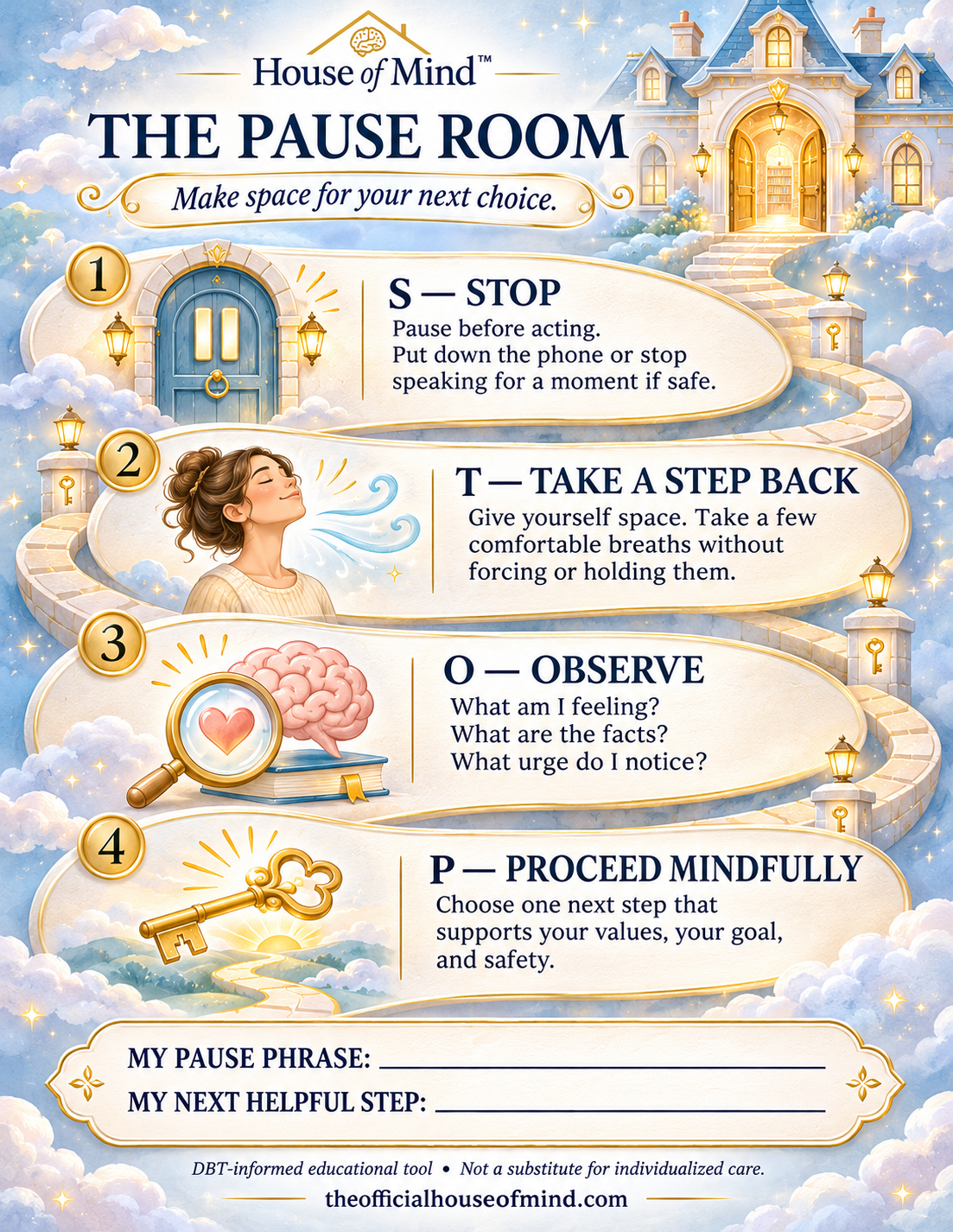
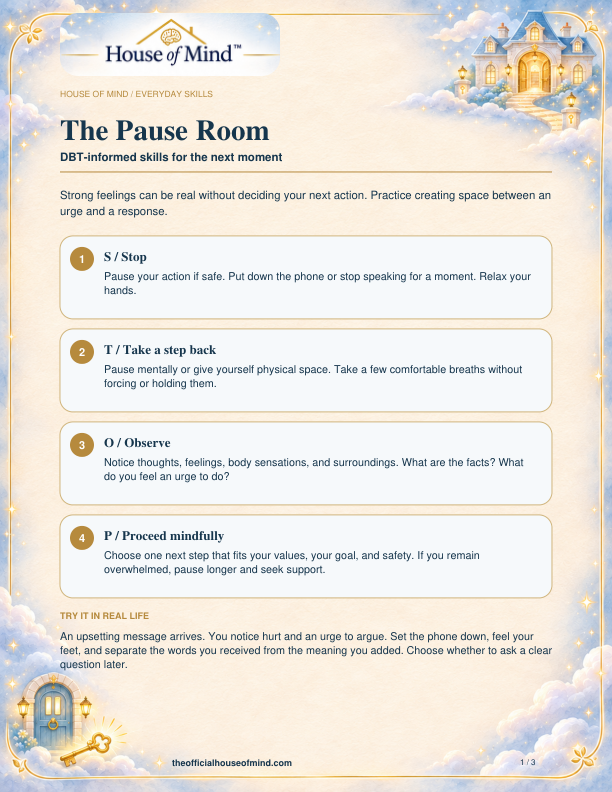
3-page printable toolkitThe Pause Room
DBT-informed skills for the next moment
Strong feelings can be real without deciding your next action. Practice creating space between an urge and a response.
01 Learn the skill02 Make it yours03 Keep-close cards
Download this toolkit PDF ↓Preview the three pages ↗ 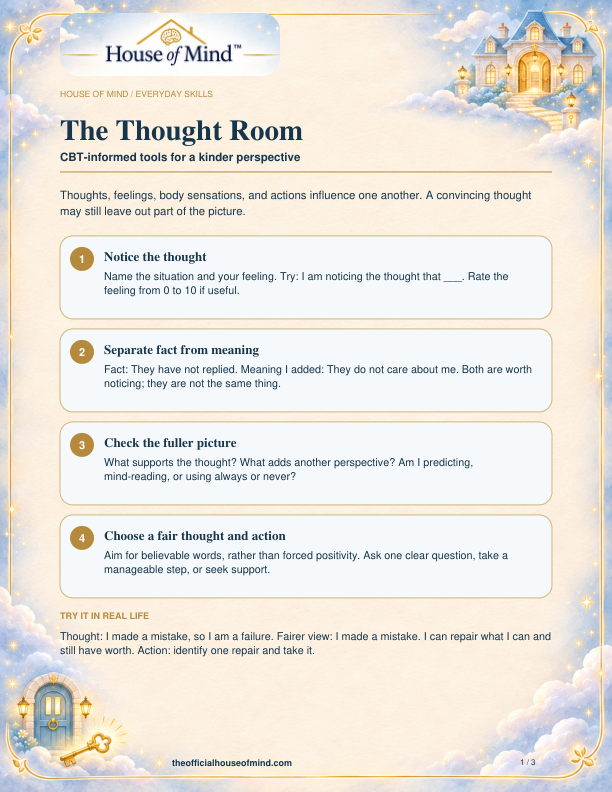
3-page printable toolkitThe Thought Room
CBT-informed tools for a kinder perspective
Thoughts, feelings, body sensations, and actions influence one another. A convincing thought may still leave out part of the picture.
01 Learn the skill02 Make it yours03 Keep-close cards
Download this toolkit PDF ↓Preview the three pages ↗ 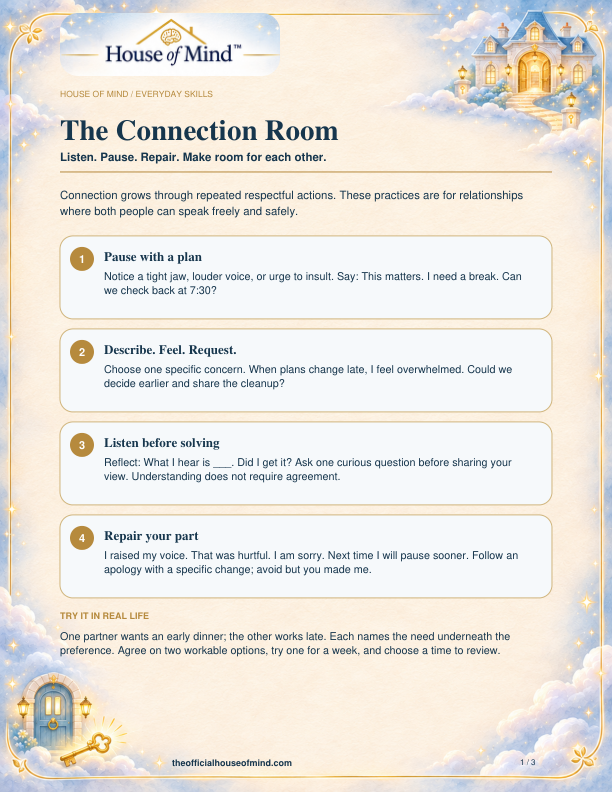
3-page printable toolkitThe Connection Room
Listen. Pause. Repair. Make room for each other.
Connection grows through repeated respectful actions. These practices are for relationships where both people can speak freely and safely.
01 Learn the skill02 Make it yours03 Keep-close cards
Download this toolkit PDF ↓Preview the three pages ↗ 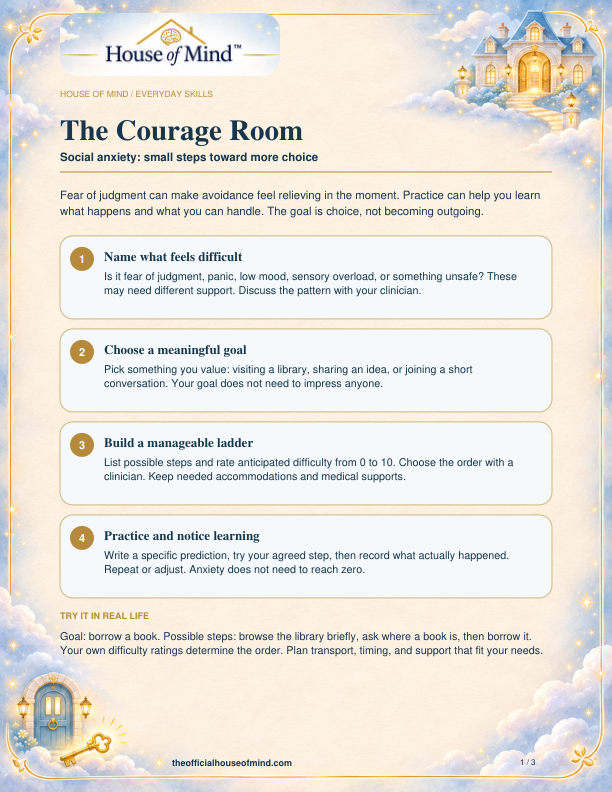
3-page printable toolkitThe Courage Room
Social anxiety: small steps toward more choice
Fear of judgment can make avoidance feel relieving in the moment. Practice can help you learn what happens and what you can handle. The goal is choice, not becoming outgoing.
01 Learn the skill02 Make it yours03 Keep-close cards
Download this toolkit PDF ↓Preview the three pages ↗ 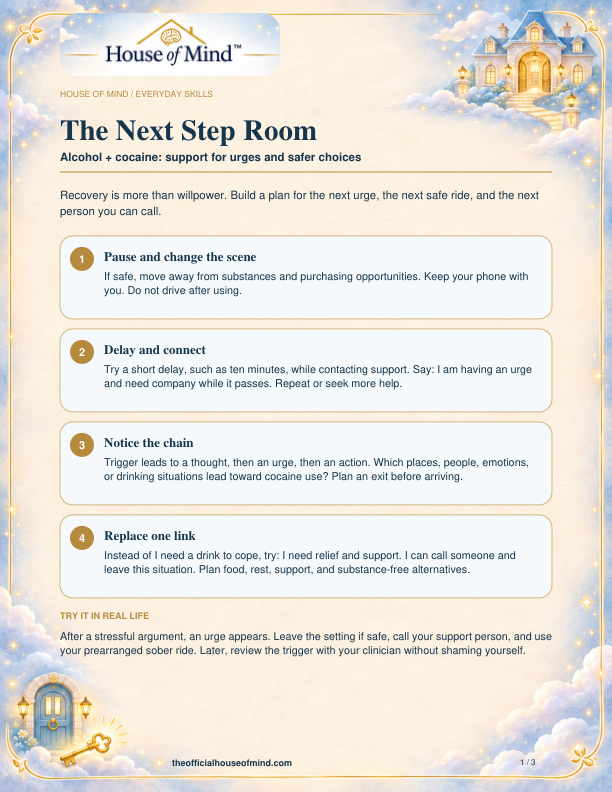
3-page printable toolkitThe Next Step Room
Alcohol + cocaine: support for urges and safer choices
Recovery is more than willpower. Build a plan for the next urge, the next safe ride, and the next person you can call.
01 Learn the skill02 Make it yours03 Keep-close cards
Download this toolkit PDF ↓Preview the three pages ↗ 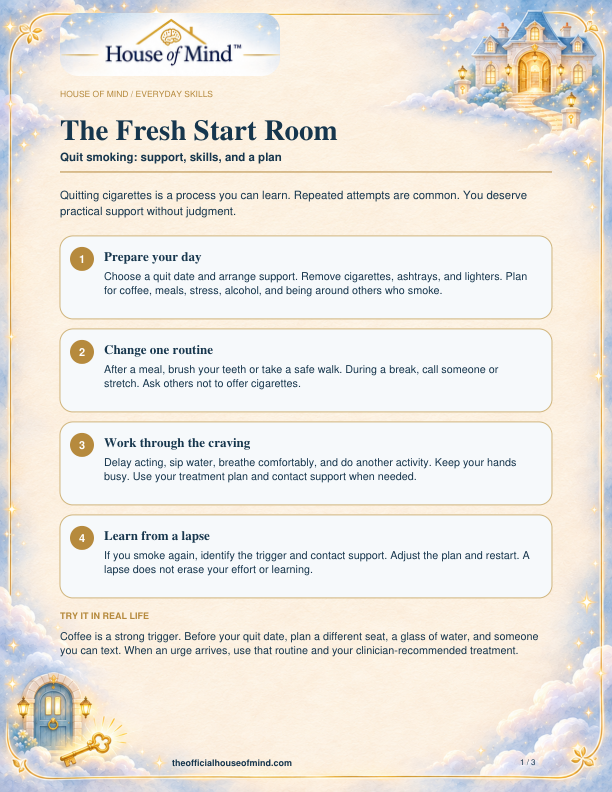
3-page printable toolkitThe Fresh Start Room
Quit smoking: support, skills, and a plan
Quitting cigarettes is a process you can learn. Repeated attempts are common. You deserve practical support without judgment.
01 Learn the skill02 Make it yours03 Keep-close cards
Download this toolkit PDF ↓Preview the three pages ↗ 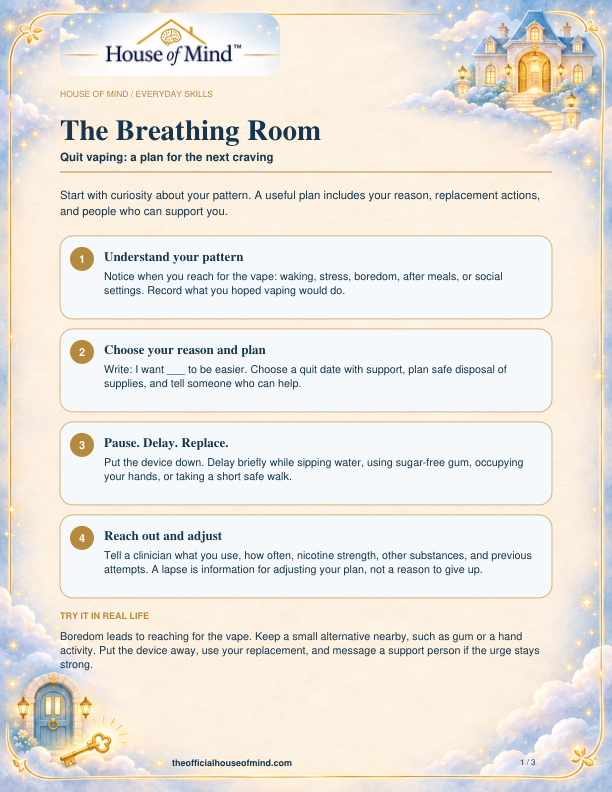
3-page printable toolkitThe Breathing Room
Quit vaping: a plan for the next craving
Start with curiosity about your pattern. A useful plan includes your reason, replacement actions, and people who can support you.
01 Learn the skill02 Make it yours03 Keep-close cards
Download this toolkit PDF ↓Preview the three pages ↗ 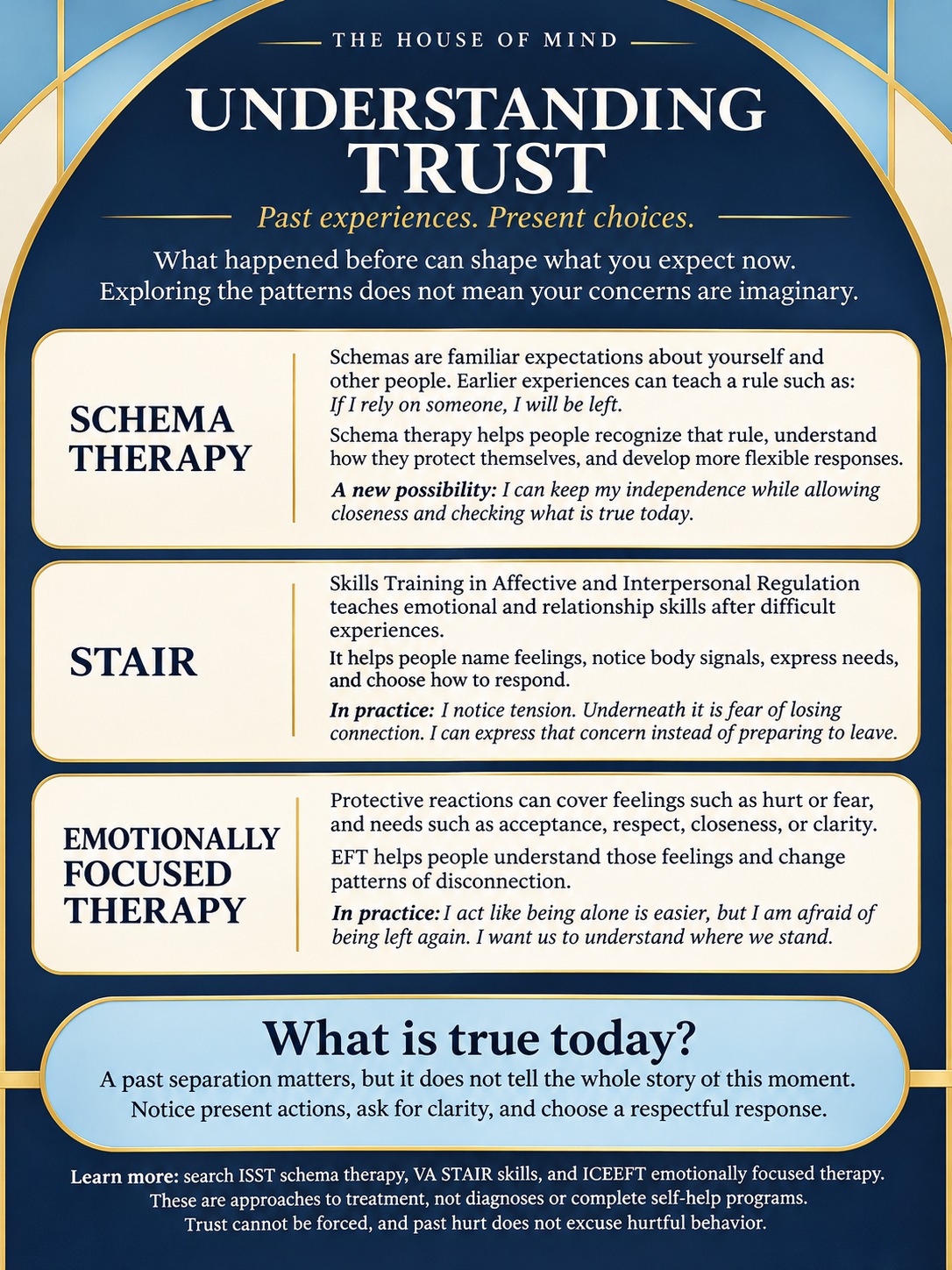
Learn about therapy / Keep a picture closeUnderstanding
Trust.
Past experiences can shape present expectations. Learn what schema therapy, STAIR, and emotionally focused therapy explore, with examples of more flexible responses and needs beneath protective reactions.
No printing needed. Educational explanations, not diagnoses or a complete treatment program.
Print a page. Practice a little. Return when you need it.
These guides are portrait US Letter pages (8.5 × 11 inches). Print single-sided at actual size, or choose fit to printable area if your printer needs wider margins. No folding is needed. Cut the four reminder cards from page three if you would like a smaller prompt to keep close.
The complete collection contains all seven three-page toolkits plus the one-page Pause Room poster. The ZIP contains the individual PDFs. You can also keep the PDFs on your phone or bring a practice sheet to a clinician.
These original educational tools are not therapy, a diagnosis, a detox plan, or a complete CBT or DBT program. Adapt practice for your needs and safety with a qualified clinician. House of Mind offers educational resources and nonclinical conversations. If there is immediate danger or a medical emergency, call 911 in the U.S. Sources and topic-specific safety guidance are included in each toolkit.