Understanding Trust
Past experiences. Present choices.
What happened before can shape what you expect now. Exploring the patterns does not mean your concerns are imaginary. Trust can be affected by earlier experiences, present behavior, or both.
Save the educational picture · JPEG ↓Schema therapy: the rules we learn
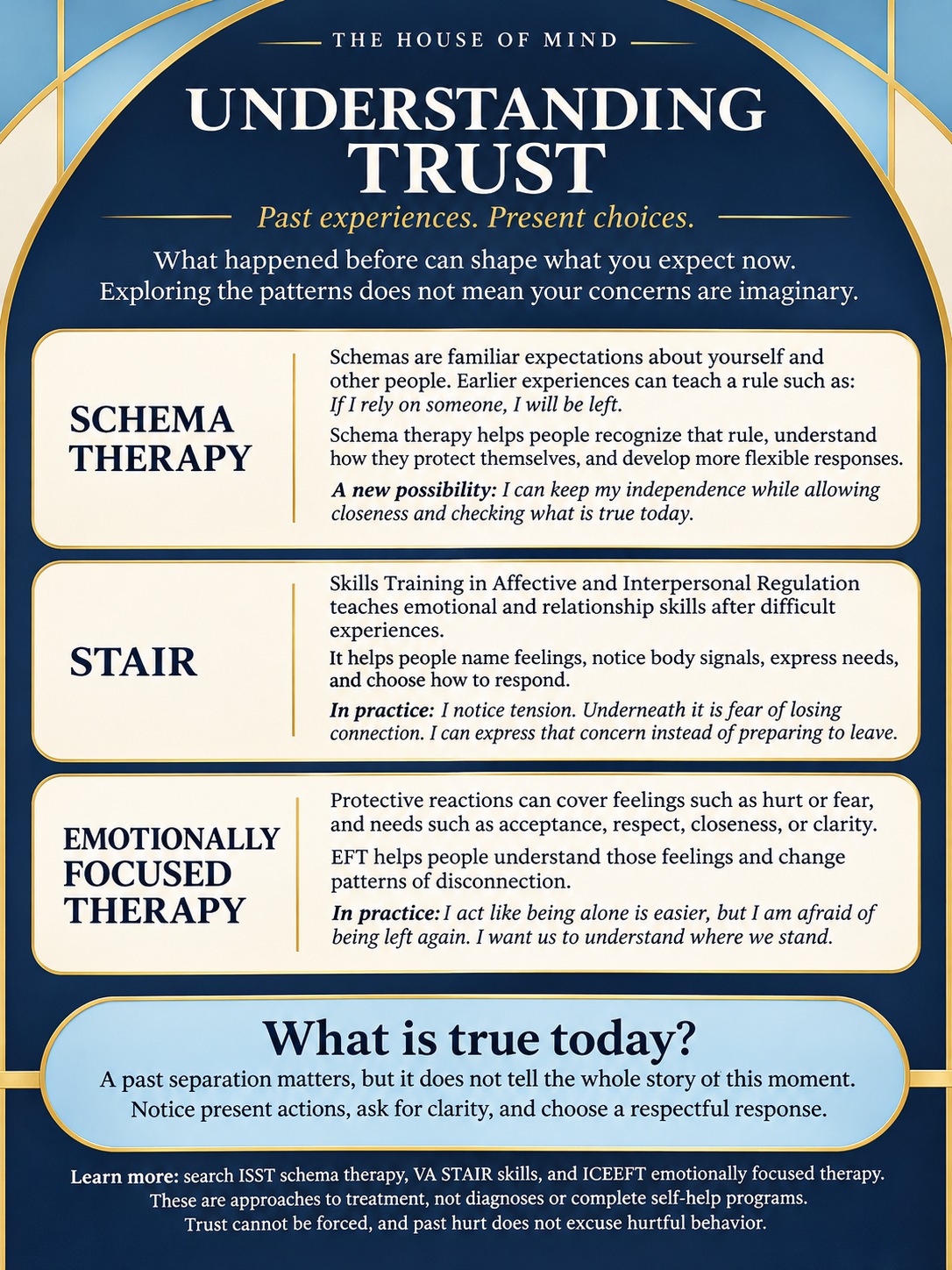
A schema is a familiar pattern of expectations about yourself and other people. Earlier experiences may teach a rule such as “If I rely on someone, I will be left.” Schema therapy explores how that rule developed, the ways a person copes with it, and whether a more flexible response fits present circumstances.
This work can involve noticing recurring patterns, examining current evidence, and practicing different responses. More intensive techniques, such as imagery work, are part of treatment with an appropriately trained clinician.
A new possibility: “I can maintain my independence while allowing closeness and checking what is true today.” This does not mean assuming everyone is trustworthy or ignoring a current problem.
Explore schema therapy concepts with the International Society of Schema Therapy ↗
STAIR: skills for emotions and relationships
STAIR stands for Skills Training in Affective and Interpersonal Regulation. It teaches emotional and interpersonal skills following traumatic experiences. Areas of practice include recognizing feelings and body signals, managing distress, expressing needs, and understanding expectations in relationships.
In practice: “I notice tension and an urge to withdraw. I may be afraid of losing connection. I can name the concern and choose a respectful way to express what I need.”
The full program is delivered with a mental health professional. A brief educational guide does not replace it, and reading this page does not imply a trauma-related diagnosis.
Emotionally focused therapy: what is beneath the protection?
Emotionally focused therapy explores emotional experience, attachment needs, and recurring patterns of disconnection. Pulling away or reacting sharply can sometimes cover hurt, fear, or shame. Possible needs beneath those feelings include acceptance, respect, closeness, clarity, and emotional safety. These are possibilities to explore, not assumptions about any person.
One way to understand the pattern is to move from the outward response to the feeling, then the need: “I pull away → I fear being left → I want clarity about our relationship.” Naming a need can make it easier to express it without an accusation; it does not require a partner to guarantee the future.
A clearer message: “I act as though being alone is easier, but I am concerned about losing our connection. I want to understand where we stand.”
What is true today?
Past separation or betrayal matters, but it does not tell the whole story of every present interaction. Notice what happened, distinguish it from your interpretation, and ask for clarification. Choose a response that expresses your concern respectfully.
Trust cannot be demanded. It develops through lived experience and respectful conduct. These ideas do not mean dismissing real harm, monitoring a partner, or expecting someone else to manage your reactions.
 Save the picture to your phone · JPEG ↓
Original educational material, not a diagnosis, individualized therapy, or a complete self-help treatment. Where abuse, intimidation, or fear of retaliation is present, individual safety and assessment take priority over joint trust-building exercises. House of Mind provides educational resources and nonclinical conversations.